The Ways In Which Vehicle Dynamics Data Acquisition Software Eliminates Guesswork from Chassis Setup
In the demanding world of contemporary pro-level sliding, podium finishes is no longer solely a function of raw horsepower or driver bravado. Instead, it has become a complex science that demands a scrupulous blend of picking a time-tested vehicle platform, outfitting it with the most precise performance hardware, and, most essentially, grasping its real-time performance on the track through advanced vehicle dynamics analysis tools. This exhaustive guide functions as your blueprint from the initial idea of a project car right through to the final engineering-refined tweaks that elevate a powerful machine into a repeatable podium finisher. We will thoroughly explore the art and science of car suspension tuning, showing how a state-of-the-art suspension tuning tool like GripDial removes guesswork and offers unmatched insight into your chassis's true dynamics.
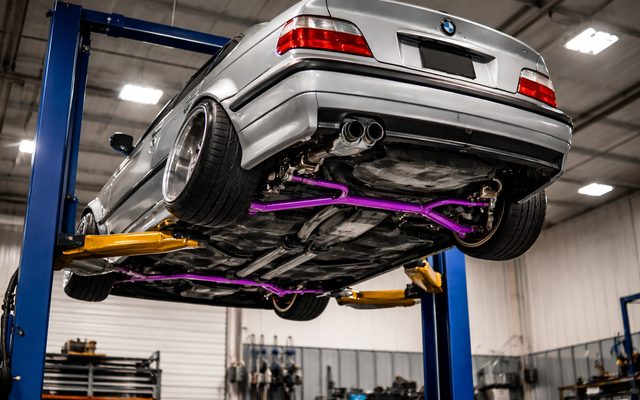
The cornerstone of any great drift machine is, without question, the base vehicle itself. Certain vehicles have achieved renowned status within the international drifting culture due to their inherent weight distribution, robust build quality, and the vast availability of aftermarket components available. Selecting the optimal car is the first and most significant decision a enthusiast will make. For instance, the BMW's E36 3 Series is commonly accepted as one of the finest balanced drift platforms of the modern era. Its near-perfect balanced front-to-rear weight, alongside a rear-wheel-drive configuration and bulletproof straight-six engines, forms a platform that is both accessible for newcomers and highly competitive in the possession of a professional driver. The successor of this concept, the BMW E46 platform, builds upon these attributes with a increasingly developed frame, broader wheel track for greater high-speed stability, and even a greater degree of turning capability straight from the factory. A distinct dominant option in the professional circuit is the C6 generation Corvette.
This V8-powered sports car introduces a unique array of benefits to the sliding world, such as a low-mass aluminium structure, a transaxle-style transaxle that helps create an excellent front-to-rear mass ratio, and the tremendous thrust of a powerful LS-series V8 engine. This combination transforms it into an complete monster on track, able of entering and sustaining continuous angles with relatively easy use of throttle. For those seeking remarkable performance per dollar, the 350Z model Nissan rises above as a prime example. It comes from the manufacturer with a stiff body structure, a effective original LSD, and the free-revving V6 engine that delivers sufficient performance for practicing and advancing in the discipline. Its follow-up, the Nissan Z34, presents more improvements in chassis stiffness, steering geometry, and outright motor performance, solidifying its place as a favorite choice among serious pilots. Further legendary platforms that merit mention are the lightweight rotary-powered Mazda FC, the most popular Nissan S13 240SX, the American SN95 generation Mustang, the modern E90 3 Series, and the small yet surprisingly fun and instructive Mazda Miata. All of these platforms offers a different array of characteristics, difficulties, and possibilities, but they all have in common the basic ingredients essential to become a capable drift car.
However, choosing the optimal chassis is only the beginning. To release the complete potential of any of these machines, significant modifications to the steering system and suspension systems are completely essential. This is where the world of precision tuning hardware comes into critical view. The most most transformative upgrade for a serious competition vehicle is the integration of a high-performance steering angle kit. These advanced assemblies, for example those manufactured by industry leaders like specialist manufacturers, are designed to radically increase the car's available lock-to-lock rotation. A OEM road car is highly constrained in how far its tires can pivot, a design compromise for public road operation. In sliding, conversely, aggressive steering input is frequently required to catch and maintain a angle. An steering kit substitutes the OEM uprights, rod ends, and often A-arms with pieces that allow the front tires to reach steering lock over 70 or even 80 degs, versus a normal OEM angle of around 40 to 50 degs.
This vastly greater steering angle provides the pilot with significantly more command during a slide, enabling it to be far more straightforward to start a oversteer moment, sustain it through a sweeping corner, and change fluidly from one angle to another. The improvement in handling is absolutely revolutionary. Combined with a appropriately selected modification is the every bit as essential enhancement to the car's suspension. Generic or including high-end sport coilovers are generally not engineered for the unique and extreme demands of competitive oversteer. A dedicated system of adjustable dampers is of utmost importance. These specific suspension components incorporate unique damping rates and spring strength that are tuned for the extreme load shifting that is typical of drifting. When a operator initiates a slide, the chassis's weight is shifted forcefully to the outer of the bend. Correct performance dampers manage this movement in a predictable way, permitting the chassis to stabilize promptly and providing the pilot clear feel through the controls and seat. They additionally provide precise tuning of stance, damping firmness, and weight balance, which are all fundamental parts of dialing in the chassis's handling to a particular venue or driving style. In combination, a top-tier steering angle kit and a correctly selected pair of performance coilovers form the undeniable physical cornerstone upon which all subsequent tuning is built.
Once the fundamental components is in place, the subsequent critical step in the development is the detailed setting of the vehicle's wheel angles. This is the world of car suspension tuning, a process that can feel daunting to the uninitiated but is, in fact, the key to transforming a assembly of high-performance components into a harmonious and controllable machine. The most discussed element of suspension geometry for drifting is undoubtedly camber. Camber is the angle of the rim compared to the perfectly straight line when observed from the forward of the vehicle. When the top edge of the tire is leaning towards the car, this is known as negative camber. In oversteer driving, negative camber on the front wheels is generally used and is seen as critical. The logic is fundamentally linked to vehicle dynamics.
When a vehicle is going around a bend at limit sideways angles, the body rolls to the external of the bend. This lean makes the outside front suspension tuning tool tire to lose its optimal contact patch with the track surface. By applying negative camber, the wheel is pre-angled to counteract this roll. As the vehicle leans into the corner, the outside front tire gains a better contact patch with the asphalt, increasing its traction at the precise point when it is absolutely essential for steering authority. Typically, front axle angles for a dedicated drift machine range from approximately -3 degrees to as high as -5 degrees or even beyond, contingent on the details of the chassis drift tuning app geometry, rubber choice, and operator feel. The rear tires also utilize negative camber, but the settings are typically more modest and subtler than the front. Overly aggressive camber at the rear can make the car extremely prone to oversteer and difficult to predict on throttle use, as it diminishes the usable grip area of the driven tires during forward throttle application. Hence, rear angles are often in the vicinity of -1 degree to -3 degrees, achieving a careful balance between giving enough lateral grip to aid in starting and holding the slide while also maintaining usable grip for exiting the bend. Camber is merely one component of the broader alignment equation, which furthermore includes toe angle, caster angle, and bump steer modification.
Toe angle refers to the direction of the tires when looked at from above. Toe-in means the front edges of the tires are nearer together than the trailing edges, while negative toe means the converse. For oversteer, a modest amount of front axle negative toe is frequently employed to improve the initial response directional reaction, making the vehicle feel more nimble and eager to initiate a drift. Rear toe is typically set to neutral or a incredibly small amount of inward toe to encourage stability under acceleration. caster angle is the frontwards or backwards tilt of the suspension pivot when viewed from the side of the chassis. More positive caster increases steering feel and stability solidity, and it additionally increases camber effect during turning, which is highly useful. Tuning these values is a detailed dance where a adjustment to a single setting can and often will impact the others. The traditional process for tuning a car's suspension geometry for sliding has long been a labor-intensive affair of guesswork and adjustment. A pilot or engineering group would introduce a adjustment based on intuition, drive the chassis on track, use the driver's subjective feel and impressions, and then make another tweak. This process would iterate again and again until the chassis felt "right" or the scheduled testing period ran out. This system is not only exceptionally inefficient in terms of hours and resources, but it is additionally deeply inaccurate.
Pilot feel is a infamously inconsistent measurement tool, influenced by many elements such as tiredness, evolving track conditions, ambient heat, and merely the mood of the driver on that specific run. What feels "loose" on one run might feel "pushing" on the next run, resulting in contradictory feedback and ineffective tweaks. This traditional challenge in vehicle dynamics optimization is specifically where modern engineering tools has intervened to transform the process.
The development and integration of sophisticated suspension tuning applications has introduced a new era for engineering and refining high-performance sliding vehicles. This new generation of platforms, showcased by innovative products like GripDial, function by directly capturing the live mechanical movement of the car as it is operated on the circuit. In contrast to relying on subjective feel, these tools gather objective data on essential factors such as damper compression and extension, corner velocities, G-force loading, wheel angle, and throttle and brake input. This raw information flow is then processed by advanced software that can graph and interpret the data in a actionable format. For the very first time, engineers and builders can visualize exactly what the chassis is doing at every point of a lap. This function transforms the complete chassis setup workflow. Consider the particular goal of dialing in the front camber for a specific car. Rather than applying a adjustment from -3 degrees to -3.5 degrees and then testing several runs to try and "perceive" a improvement, a telemetry system can give real-time and irrefutable information. The application can display visually how the wheel's grip is behaving during the critical phases of a slide: the initial flick, sustain, and transition. It can show if the existing value is allowing the loaded tire to maintain optimal loading or if the rubber is overloaded on its outer shoulder.
The software can then provide data-driven recommendations for change. Perhaps the telemetry shows that the outside front tire is still overworking its edge at -3.5 degrees of negative camber, implying that an increase to negative camber, say -4 degrees, might be warranted. Conversely, the information might reveal that the tire is not achieving temperature or that the inner edge is degrading excessively, which could indicate that there is overly aggressive angle and a small reduction back to -3.2 degrees would be better efficient. This standard of granularity and practical intelligence was completely impossible in the era of solely seat-of-the-pants adjustment.
The effect of using a comprehensive drift telemetry system goes far beyond just dialing in camber angles. It becomes an priceless damper adjustment manual that is specific to your exact vehicle. When setting the damping settings on your coilovers, rather than using vague advice or mimicking another team's numbers, you can use the telemetry to observe how the car is performing in response to your tweaks. The tool can display the damper movement path over a run, showing if the shocks are managing the body movement properly or if they are permitting the car to bounce uncontrollably after a transition. It can help in diagnosing challenges like bottoming out or topping out, permitting you to introduce educated choices to spring preload, damping values, or ground clearance. This process applies similarly to the intricate task of car alignment tuning. In addition to camber angle, the system can offer analysis into how modifications to toe and caster are affecting the chassis's handling during various phases of a lap. For example, it can help you to find the ideal amount of front axle toe-out for your specific drift suspension tuning guide angle kit setup and competition approach by showing the quickness of initial response and the consistency of the chassis at lock steering angle. This transforms the tool an incredibly effective vehicle dynamics manual that is constantly informed by the live behavior of your specific vehicle on the tarmac. It moves the complete endeavor from a mysterious craft into a repeatable optimization procedure.
Furthermore, the application of a system like modern telemetry is in no way limited to professional teams with large funding. For the grassroots enthusiast, it functions as an incredible equalizer. It in essence provides the driver with the knowledge of a expert dynamics engineer without requiring the typical cost. It speeds up the tuning process by providing unambiguous solutions to challenges that would otherwise take seasons of trial and error to solve. A tuner can learn how their specific chassis reacts to various settings, building a more profound knowledge of vehicle dynamics in the process. It also makes accessible advanced performance tuning concepts, allowing anyone with the drive to refine their car to do so in a structured and effective manner. This is particularly important in a sport like drifting, where setup know-how has traditionally been a tightly held asset among professional crews. Today, that capability can be in the garage of any dedicated enthusiast.
In the final analysis, the process to constructing and optimizing the perfect championship-contending drift machine is a multi-stage endeavor that smoothly combines time-honored hardware principles with cutting-edge telemetry tools. It starts with the strategic pick of a legendary platform, followed by the installation of non-negotiable drift-spec components like maximum-angle angle modification systems and expertly specified drift-spec suspension units. The journey then moves into the precision phase of car suspension tuning, where values like camber angle, toe, and caster angle are carefully adjusted to complement the chassis's modified hardware and the driver's personal style. Ultimately, and what truly separates the modern process from the old ways, is the integration of a sophisticated suspension tuning application. This system eliminates the approximation and waste of solely subjective adjustment by providing empirical, real-time information on how the vehicle is truly performing. It acts as an indispensable diagnostic aid, a actionable alignment optimization handbook, and a comprehensive chassis development system. Together, this integrated approach leads to that each and every aspect of the competition vehicle—from the choice of the car to the final adjustment on the suspension—is refined for ultimate performance on the circuit. It embodies the total evolution of the discipline of oversteer driving, connecting raw car control with surgical vehicle setup to create the most competitive cars attainable.